


In this article
- What can contribute to back discomfort?
- When to seek medical advice
- What yoga can offer
- Getting started
- A short practice
- Seven poses to explore
- Common mistakes
- Frequently asked questions
- Build a guided routine
Yoga for your back
A long day at a desk, time in one position, stress or unfamiliar effort can leave your back feeling stiff or tired. You may notice tension between the shoulder blades, discomfort in the lower back or a desire to move more freely.
A gentle, adapted yoga routine combines movement, strength and rest. Many beginner options are simple enough to explore at home, although new or significant pain needs assessment and unfamiliar poses are best learned with guidance.
What can contribute to back discomfort?
Your back is more than your spine. Muscles, joints, hips, shoulders and the way you move all contribute to your experience. Discomfort can have many causes, and identifying a single cause is not always possible.
- Long periods of sitting in one position
- Limited movement variety during the day
- A sudden increase in effort
- Tension around the back, neck and shoulders
- Fatigue after unfamiliar activity
- Stress and difficulty relaxing
- A workstation that makes changing position awkward
Several factors often overlap. A comfortable, adjustable setup and regular changes of position are more useful than trying to hold a rigid “perfect” posture.
When to seek medical advice
Seek prompt assessment for severe or worsening pain, pain after injury, fever, numbness or weakness. New bladder or bowel control problems, loss of sensation around the genitals or anus, or weakness and numbness in both legs need emergency help.
Persistent pain or symptoms affecting daily life also deserve advice. If you have a spinal condition, fragile bones, are pregnant or are returning after surgery, choose your practice with appropriate professional guidance.
What yoga can offer
Yoga is not just stretching. An adapted session may include:
- Gentle movement: explore stiffness within a comfortable range.
- Supporting strength: gradually work the back, abdomen and glutes.
- Awareness of position: notice how your head, shoulders, hips and spine feel.
- Comfortable breathing: avoid holding your breath during effort.
- Relaxation: give yourself time to release unnecessary tension.
Think of practice as a regular part of caring for your body, rather than a single workout expected to fix every problem.
Getting started
You do not need deep backbends or difficult poses. Begin with a short lesson that includes easy spinal movement, gentle lengthening, simple strength work and a period of rest.
- Avoid working through pain.
- Move slowly, without jerking or forcing.
- Keep breathing comfortably.
- Choose simple variations and use support.
- Build effort gradually and allow recovery.
- Select lessons that match your experience and any restrictions.
A few manageable minutes can fit into the morning, after work or before bed. Let comfort and consistency guide the routine.
A short practice
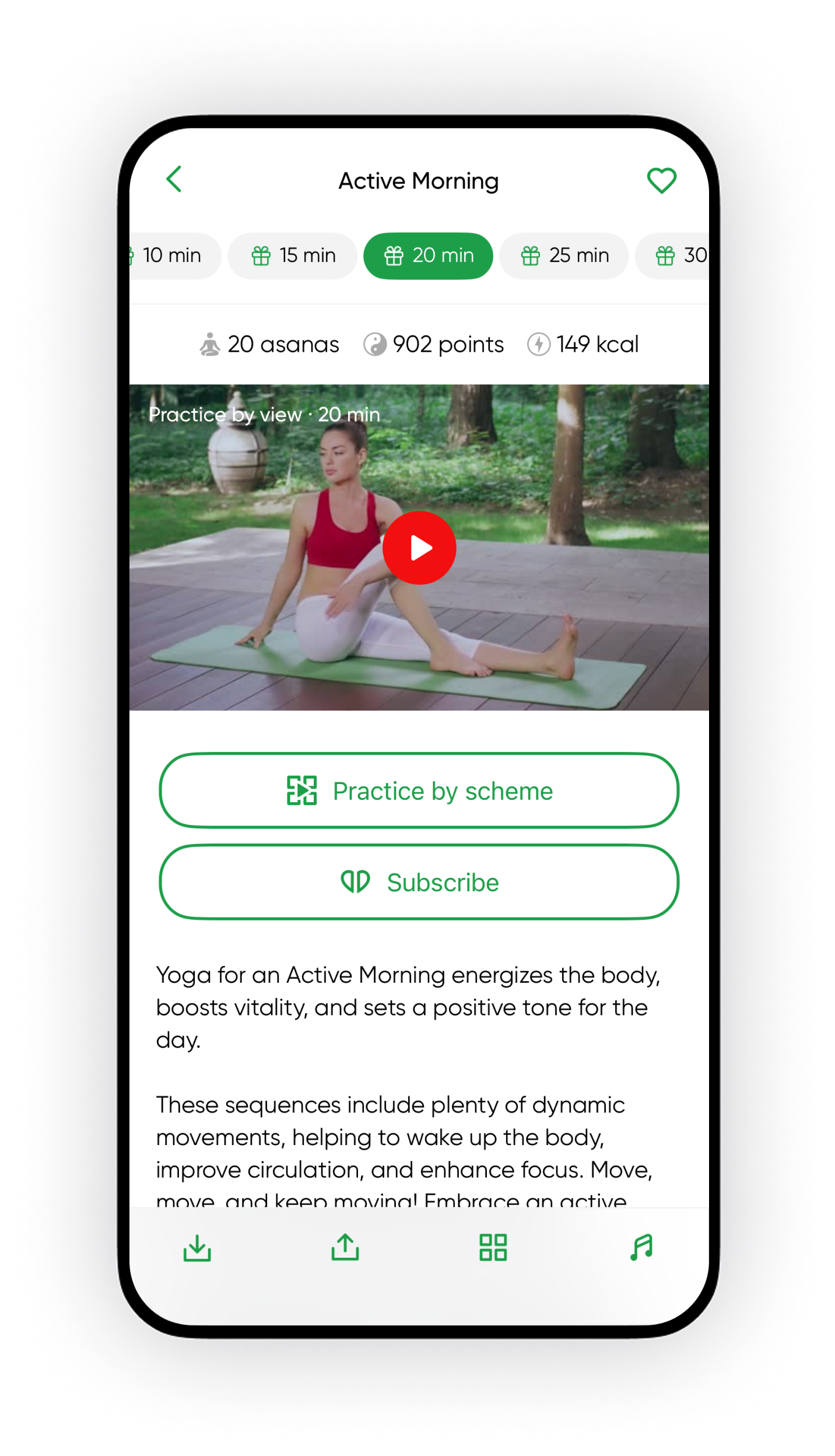
Try a gentle lesson only if the movements are appropriate for you. Rest, modify or skip a pose whenever needed.

Seven poses to explore


The right variation depends on your body and symptoms:
- Cat movement: move the spine slowly through a small, comfortable range.
- Downward-Facing Dog: bend the knees or place the hands on a wall to make the position easier.
- Sphinx Pose: explore a mild backbend without pushing into the lower back.
- A lying spinal twist: keep it shallow and let the legs rest on support if needed.
- Half Bridge: engage the glutes with a small, controlled lift.
- Staff Pose: sit on a folded blanket or bend the knees so the back can remain comfortable.
- Standing back-strengthening pose: choose a manageable range and learn the alignment with an instructor.
No pose is suitable for every back. Individual exercise advice takes priority over a general catalogue.
Common mistakes
- Moving abruptly or too quickly
- Stretching through pain
- Starting with deep backbends or strong twists
- Ignoring symptoms in the neck, shoulders or lower back
- Expecting one session to produce a lasting change
- Focusing only on stretching and overlooking strength
- Holding the breath during effort
Balance gentle movement with gradual supporting strength. Increase the load only when the current level feels manageable.
Frequently asked questions
Can yoga help with back pain?
Some people find an adapted practice useful, but the response depends on the cause and the routine. Get advice for severe, sudden or persistent pain.
Can I practise at home?
Simple, appropriate movements can be practised at home. Learn unfamiliar poses with guidance and begin with manageable sessions.
Which style is best?
The teacher, adaptations and level matter more than the style name. Start with comfortable movement, supporting strength and rest.
What if I have a spinal diagnosis?
Discuss appropriate movements with your clinician or physiotherapist and tell your instructor about the advice.
How many minutes should I practise?
A short routine is a reasonable start. Build up according to your response rather than a fixed target.
Which exercises suit beginners?
Small Cat–Cow movements, supported resting poses and simple strength options may be suitable, depending on your needs.
Can I practise every day?
Gentle movement may fit into many days if comfortable. Alternate more demanding sessions with recovery and adapt if symptoms increase.
Build a guided routine
A series of suitable lessons can help you add movement to everyday life. Begin with gentle options and progress when your body is ready.





Comments
+ leave yoursThis article has no comments yet, be the first