


In this article
- Why weight management can be difficult
- When to get individual advice
- What yoga can offer
- Starting as a beginner
- Short guided lessons
- Seven poses to explore
- Common mistakes
- Frequently asked questions
- Guided programmes
Yoga for weight management
Starting to move regularly can be harder than choosing a workout. After a working day, a gym session may feel like too much. A suitable yoga routine can offer a manageable beginning: learn simple movements, gradually build strength and make time for activity.
Yoga may be one part of weight management. Body-weight changes depend on eating patterns, overall activity and many individual factors; one class or pose cannot guarantee weight loss. Practice can still be useful when the scale changes slowly, through greater movement confidence and control.
Why weight management can be difficult
Reducing body fat generally involves using more energy than you take in over time. Activity and food both play a role, as explained in the CDC guide to physical activity and weight. Individual needs vary.
Everyday circumstances can make changes difficult:
- Long desk days and limited activity
- Portions, snacks and energy-containing drinks that are easy to overlook
- Insufficient sleep and ongoing stress
- Alternating strict restrictions with previous habits
- Workouts too demanding to sustain
- Some health conditions and medications
A manageable routine is more useful than looking for one “fat-burning” exercise. If weight management feels difficult or distressing, appropriate professional support can help.
When to get individual advice
Discuss suitable activity if you have a heart condition, poorly controlled blood pressure, injury or significant joint or back pain. Pregnancy and recovery after birth call for an adapted approach.
If a health condition or medication may be contributing to weight changes, seek advice and do not stop medication on your own.
Stop practice and seek help for chest pain, marked breathlessness, dizziness or feeling faint. General information cannot replace individual recommendations.
What yoga can offer
Yoga combines movement, held positions, breathing and rest. Different sessions involve very different levels of effort.
- More activity: movement and holds use muscles and energy.
- Supporting strength: standing poses and hand-supported positions challenge the legs, glutes, arms and trunk.
- Mobility and control: practise positions and transitions at your own level.
- Time to unwind: gentle movement and rest may help you manage tension.
- A regular habit: practice can encourage attention to activity, recovery and meals.
Research on yoga and weight varies, and some programmes also change eating habits. It cannot establish a fixed amount of weight loss from poses alone.
Starting as a beginner
A 10–15-minute session a few times a week can be a manageable introduction, rather than a required “dose” for weight loss. Increase duration when the movements feel familiar and recovery is comfortable.
- Choose lessons for your level, not just their title or length.
- Allow time to warm up and finish gently.
- Learn technique before increasing speed or hold times.
- Use easier variations and take breaks.
- Breathe freely and avoid working through pain.
- Increase effort gradually, with time for recovery.
Use a stable, non-slip mat and enough clear space. A wall or sturdy chair can support some movements. An instructor can help if you are unsure about technique.
Complement yoga with walking or other activities you enjoy. Build a schedule that works in an ordinary week.
Short guided lessons
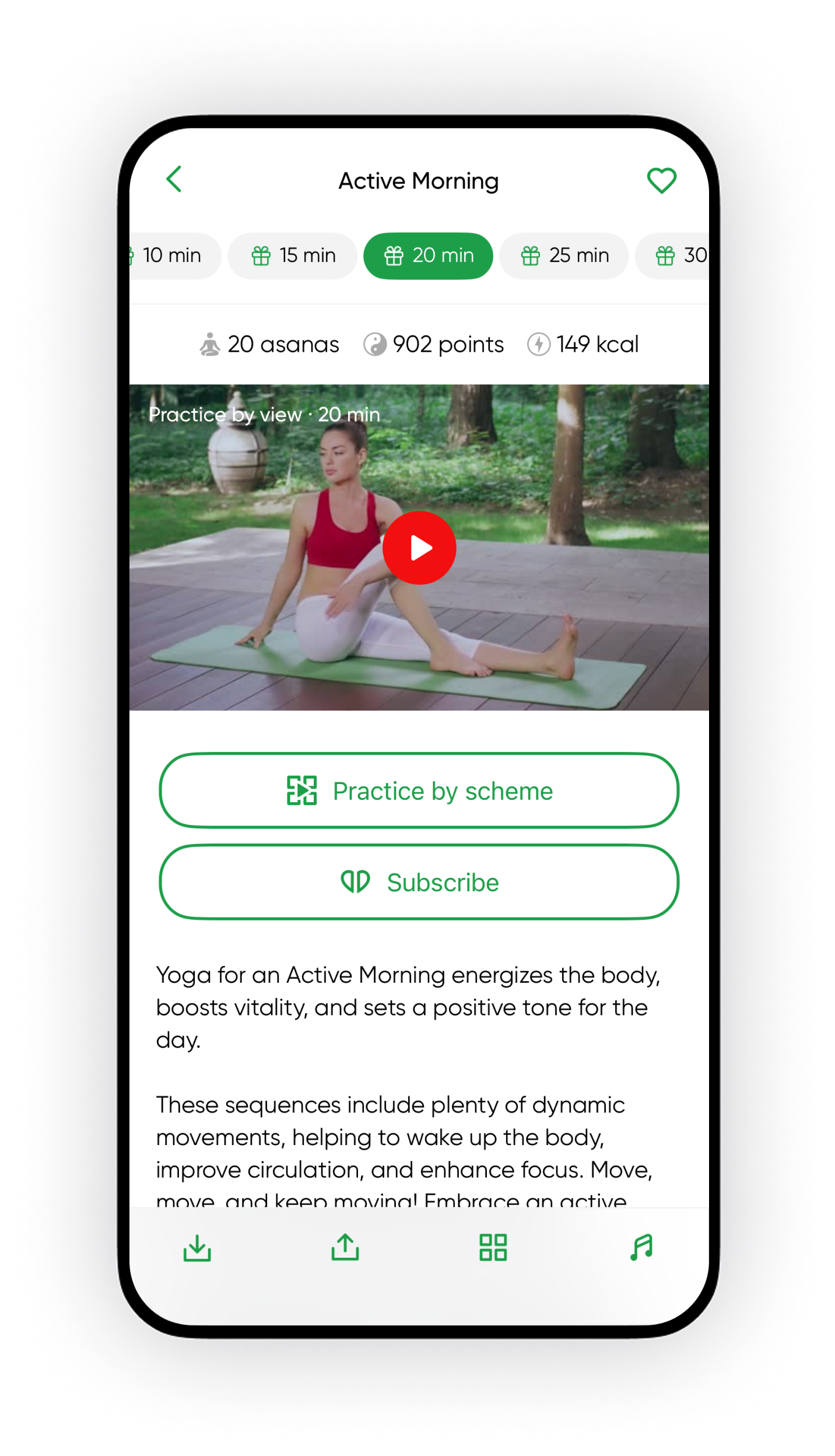
A 15-minute lesson can be a practical option when time is limited.

If basic poses are familiar and you are ready for more effort, explore a 30-minute option. Allow time for pauses.

Preview the lesson first. Short does not automatically mean easy. Modify movements and rest if technique deteriorates. The seven poses below are a separate technique guide, not a description of every element in these videos.
Seven poses to explore
The selection includes strength, mobility and resting options. It does not target fat loss from a particular area. Use short, comfortable holds and leave before you lose control.


- Chair Pose: works the legs and glutes. Bend the knees and move the hips back as if sitting. Start shallow; reach arms forward if overhead is difficult.
- Warrior II: challenges the legs. Bend the front knee towards its toes and keep the back leg comfortably straight. Use a manageable stance and repeat on both sides.
- Plank: works the trunk, shoulders and arms. Keep hands under shoulders and avoid sagging through the lower back. Lower the knees for an easier option; skip it if wrists hurt.
- Downward-Facing Dog: combines hand support and length through the back of the body. Move the hips up and back, keep the neck easy and bend the knees as needed. Do not force heels down.
- Half Bridge: engages the glutes and back of the thighs. From lying on the back with knees bent, lift the hips to a comfortable height. Avoid pressure on the neck and do not turn the head while lifted.
- Seated Angle with hand support: challenges the abdomen and hip flexors. Place hands behind you and lift the feet while keeping length through the back. Start with bent knees and leave out the pose for lower-back or wrist discomfort.
- Child’s Pose: a resting option between exercises. Support the forehead and trunk if needed. Choose a different rest if the knees are uncomfortable.
You do not need all seven poses in one session. Learn accessible options and expand gradually.
Common mistakes
- Expecting a noticeable weight change after a few sessions
- Choosing a very hard class and then skipping practice because of fatigue
- Holding a pose while losing technique or breath comfort
- Assuming abdominal exercises remove abdominal fat
- Judging a session by how much you sweat
- Overlooking food and activity during the rest of the day
- Measuring every benefit by the scale
Notice movement confidence, manageable effort and whether you are building a routine. Those changes matter too.
Frequently asked questions
Can yoga support weight loss?
It may contribute within a broader plan, but results depend on eating patterns, activity and individual circumstances. Research on combined programmes does not mean every yoga class produces weight loss.
Which yoga is best?
A class with appropriate effort that you can attend consistently. Learn basic movements before adding demanding dynamic practice.
Can I practise at home?
Choose clear explanations, preview the lesson and use suitable variations. Get individual guidance for health limitations.
Will it remove fat from my abdomen or sides?
Trunk exercises can develop muscular endurance, but they do not guarantee local fat loss. In a study of abdominal exercises, endurance improved without a significant reduction in abdominal fat.
How many minutes should I practise?
Start with a manageable short session. There is no universal duration after which weight loss begins.
Can I practise every day?
Gentle practice may fit into many days if you recover well. Rest after more demanding strength work; daily hard classes are not necessary.
How many calories does yoga use?
It depends on body size, pace, difficulty and duration. App and wearable estimates are approximations, rather than precise measurements of your expenditure.
When will results be visible?
There is no fixed timetable. Learning movement and changing body weight can happen at different speeds. Look at patterns over time and how you feel.
Guided programmes
If a schedule helps, choose a programme whose lessons and intensity suit you. A course described as “Intensive Weight Loss in 21 Days” provides a three-week structure; the title does not guarantee a particular weight change.


Begin with manageable practice and make it part of your week. Yoga can help you move more, build strength and support habits for ongoing wellbeing.






Comments
+ leave yoursThis article has no comments yet, be the first